Left-Handed Workbench: Vise Placement for Optimal Flow
By Taro Nakamura • 11th Mar
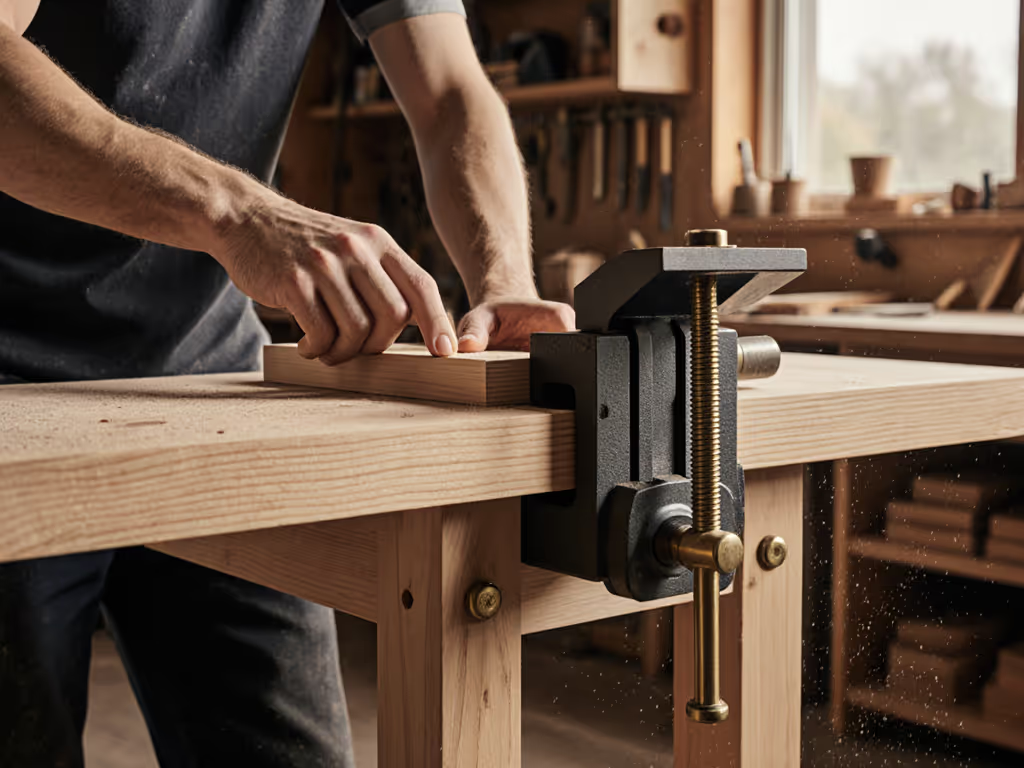
A left-handed workbench with properly positioned vise placement doesn't require guesswork or compensation strategies, it demands intentional design rooted in biomechanics and load distribution. In a southpaw woodworking bench setup, the conventional wisdom that "dominant-hand users mount on the opposite side" holds up under scrutiny, but only when you understand why that placement works and what constraints your specific shop imposes.
The misplaced vise is one of those invisible drains on efficiency: not catastrophic enough to force change, just uncomfortable enough to quietly amplify fatigue over months of work. I learned this the hard way on a film set build years ago, when a portable bench collapsed during a glue-up because the vise mounting point sat directly over a gap in the frame. Half a day lost, a lot of swearing, and the hard lesson that you cannot retrofit your way out of bad placement. The replacement was overbuilt and thoroughly unremarkable (it held, aligned, and recovered fast). That's the target.
The Ergonomic Case for Right-Side Vise Placement
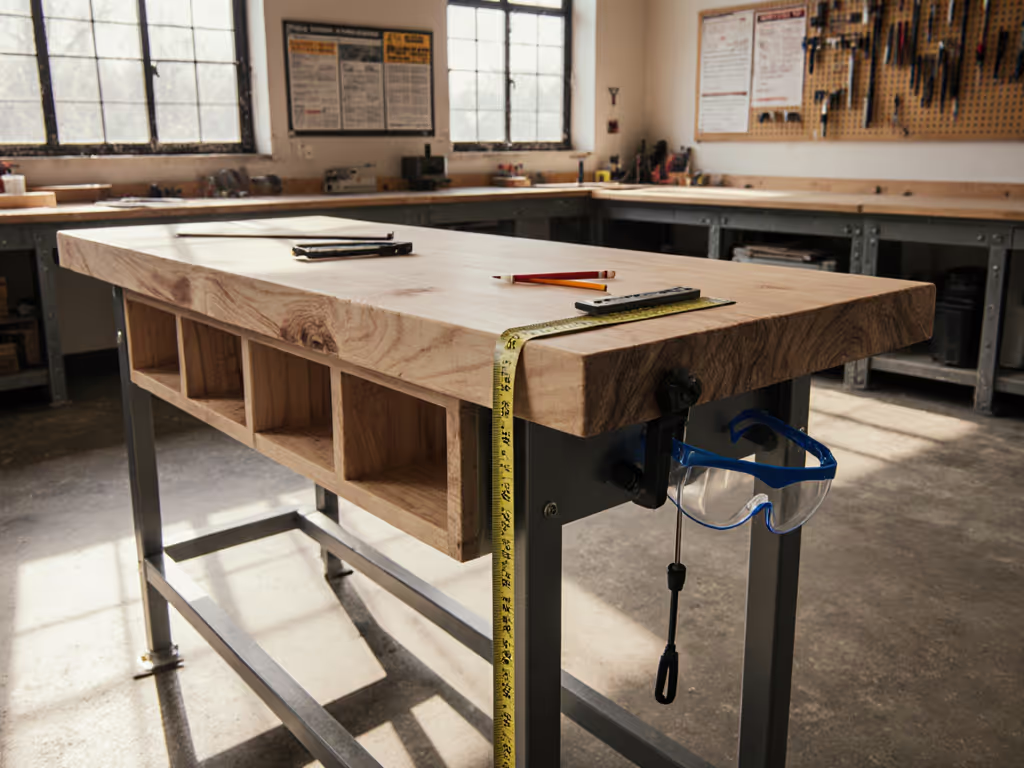
For left-handed users, mounting your vise on the right side of the bench front edge (typically toward the right leg) aligns with how your body naturally moves. Here's the mechanical reality: when you clamp a workpiece, your dominant hand (left) remains free for filing, chiseling, or inspection. Your non-dominant hand cranks the vise handle. This layout keeps your primary working hand in the strongest, most controlled zone of your reach envelope, reducing the rotational strain that comes from reaching across your centerline.
Eliminating that cross-body reach matters more than most realize. Over an eight-hour day, the cumulative torque on your lower back and shoulder rotators adds up (a fact confirmed by research into shop ergonomics and repetitive-task fatigue). You're not just being fussy; you're protecting structural capacity for a 30-year working life. For a deeper ergonomic setup, dial in your bench height with our workbench height guide.
Overbuild the interface; let precision handle the finesse.
The right-side placement also forces both hands into the workholding conversation. Because your non-dominant hand is actively managing the vise crank, it's not idle, and you gain finer tactile feedback about clamping pressure. You feel when you're over-tightening before the workpiece slips or you crack the vise jaw. That proprioceptive loop (hand-eye-pressure feedback) improves consistency and reduces botched setups.
Structural and Spatial Constraints
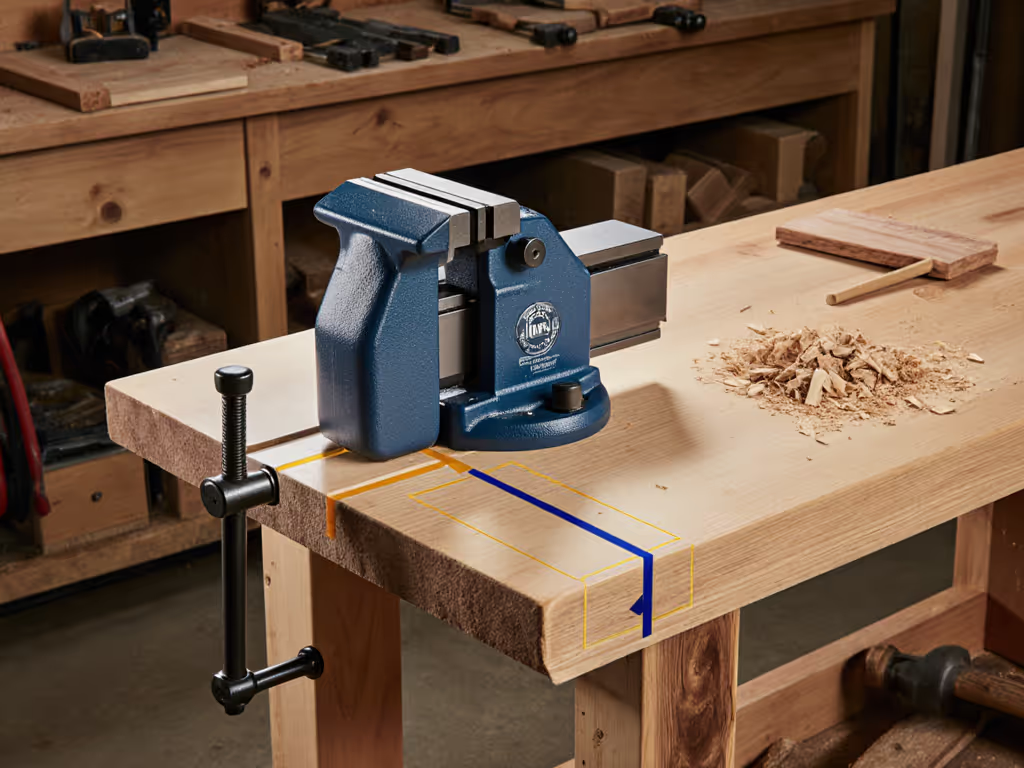
Placement isn't purely about comfort; it's about load transfer and long-term bench integrity. A vise applies concentrated force (often in the range of 4,000+ pounds of clamp pressure) directly into your bench frame. Mounting it poorly can induce racking, flex, or localized crushing of the top around the fasteners.
Load Path Considerations
The strongest mounting points on a workbench are directly above the legs and stretchers. For a left-handed setup, this typically means the right-front corner if your bench legs are positioned there. Before you drill, inspect the underside of your bench. The space beneath the vise must be clear of:
- Knee clearance zones (you need legroom to stand close and work at low angles)
- Sliding drawer supports or shelving that will conflict with the vise base
- Any structural bracing that looks solid but isn't actually tied to the load path
If your bench is not bolted to the floor, the vise location becomes even more critical. For step-by-step options, use our bench anchoring techniques to eliminate movement before it starts. A light bench (under 150 pounds) paired with a heavy vise and aggressive planing or chiseling can introduce racking or even tip risk during asymmetrical loading. In such cases, mounting on the right side (closer to a leg) is mandatory, not optional.
Clearance for the Handle
The vise handle must swing freely without striking a wall, adjacent cabinet, or the bench frame itself. A typical quick-release vise handle needs at least 18 to 24 inches of unobstructed swing arc. Test this before you commit to a location. A vise mounted ideally but rendered useless because the handle jams against a wall is a failure-mode worth preventing upfront. Measure the handle swing in your actual shop, including the angle you'll use during typical work.
The Multi-User or Shared-Space Reality
If you're setting up a shop that others will use (a makerspace, a school CTE program, or a shared garage), left-handed placement becomes a point of friction if your right-handed colleagues have to adapt. Some solutions that preserve left-hand optimization without creating resentment:
-
Dual-vise layout: Mount one vise on the right (left-hand optimized) and one on the left (right-hand optimized). This is common in professional shops and eliminates the compromise. It costs more but prevents years of "whose bench is this?" friction.
-
Offset placement: Mount a single vise toward the center-right, slightly back from the front edge. This is messier ergonomically but functionally workable for both orientations if traffic patterns don't conflict.
-
Rotation/repositioning: If your bench is portable, redesign the mounting points as through-holes with recessed T-nuts (on a 20mm grid, for example) so the vise can relocate in under five minutes. This is overkill for a fixed home shop but essential in teaching environments.
Failure Modes and Serviceability
Left-handed bench vise placement design should anticipate what goes wrong. The three most common failure cascades are:
Vise loosening over time: Bolts creep under repeated clamping cycles. Use lock washers and nylon-insert lock nuts, and re-check tightness every six months if your vise sees daily use. Overbuild the interface; don't assume finger-tight is sufficient.
Bench top splitting around fasteners: If you're drilling into a solid-wood top (not laminated), the fastener holes will migrate slightly with seasonal wood movement. Use washers large enough (at least 1.5 inches) to distribute pressure, and avoid mounting directly into grain runout zones where splitting initiates.
Vise racking under asymmetrical load: If the mounting bolts aren't equally tensioned, the vise body can twist slightly, affecting jaw parallelism and causing binding. Use a cross-pattern tightening sequence (top-left, bottom-right, top-right, bottom-left) and do a final check with a straightedge placed across the jaws in a test clamp.
Comparative Reality: Standard Placement vs. Left-Handed Optimization
Right-handed users mounting on the left typically report fewer adjustment headaches, the vise placement aligns with conventional bench design, and tool storage layouts assume that orientation. Left-handed setups require deliberate choice and, often, some custom storage or layout tweaks to support the right-side placement.
However, when a left-hand vise placement is purpose-built rather than retrofitted, the ergonomic wins are measurable: reduced fatigue, faster clamping cycles (because reach is efficient), and lower injury risk over a career. This isn't marketing; it's biomechanics.
Summary and Final Verdict
For a southpaw woodworking bench, mount your vise on the right side of the front edge, positioned to align with the bench structure beneath. Verify clearance for the handle swing, inspect the space underneath for conflicts, and use proper hardware (lock washers, nylon-insert nuts) to prevent creep. If the bench will be shared, invest in dual vises or modular mounting so left- and right-handed users aren't compromising against each other. If you're choosing a new bench, our left-handed workbench buying guide highlights models with vise locations and features that favor southpaws.
The placement itself is simple; the impact on your workflow is profound. A bench that forces you to crane across your body or reach awkwardly will never disappear into your work, it will always announce itself. Get the vise location right from the start, and you'll forget it's there, doing exactly what it should: holding your piece without drama while you focus on the craft. That's the only verdict that matters.
Related Articles