Pick the Right Vise: Moxon, Shoulder, or Pattern
By Aisha Thompson • 28th Apr
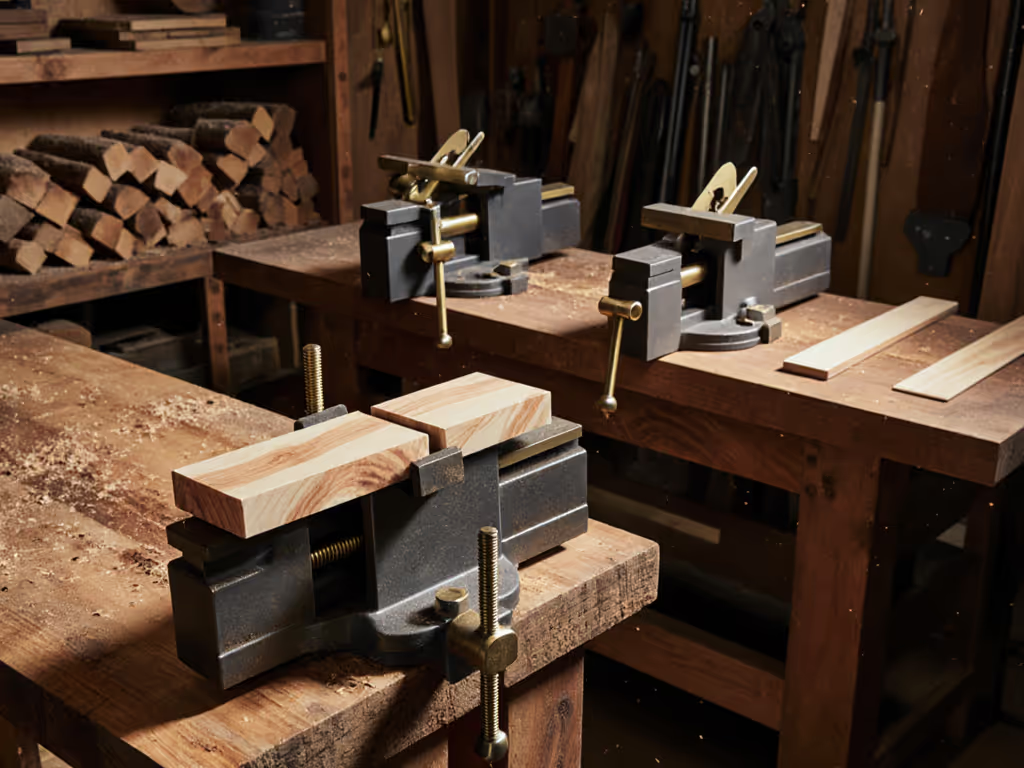
When you're standing at a workbench facing a planing task (or worse, a stubborn glue-up), the vise holding your work makes all the difference between flow and frustration. Whether you're choosing a moxon vise for your first real woodworking bench vise setup or upgrading after years of making do with clamps, understanding the three main portable vise styles will save you money, space, and countless hours of wasted motion. Begin with workflows; the right bench choices follow.
The challenge isn't that vises are complicated; it's that each type excels in different situations. A shoulder vise hugs your front edge. A pattern makers vise sits anywhere. A moxon springs open with one hand. Pick the wrong one for your mix of tasks, and you'll either feel its absence every time you work, or worse, keep buying vises trying to fill gaps you could have anticipated from the start.
This guide walks you through each type's real strengths and honest limitations, then helps you match one (or more) to the kind of work you actually do.
1. The Shoulder Vise: Traditional Workhorse for Front-Edge Clamping
What It Is
A shoulder vise mounts permanently to the front-left corner of a traditional woodworking workbench. Its screw mechanism runs parallel to the bench top, and the movable jaw (called the "shovel" or "arm") swings down and across to grip work from the front. The vise body itself becomes part of the bench frame.
When Shoulder Vise Benefits Show
- Heavy planing and chiseling: The fixed mounting and deep vise pocket make it rock-solid under aggressive handheld tool pressure. You won't experience racking or deflection when you're driving a plane iron or mortise chisel into end grain.
- Front-edge hold: If most of your work is boards and panels that you want to plane or shape from the front, this orientation is intuitive and ergonomic (you face your work directly).
- Integrated with bench architecture: On a traditional Roubo or Nicholson bench, the shoulder vise is part of the structural frame, not an add-on. This cohesion means no wobble where the vise meets the top.
- Large clamping capacity: The shovel extends well beyond standard jaw widths, so you can hold thick stock or wide assemblies without repositioning.
Trade-offs
- Bench commitment: You cannot move it without major disassembly. If your bench layout evolves, you're stuck.
- Space hungry: The vise body consumes real estate on the front-left corner. In a small shop, that front edge might be your only outfeed space.
- Installation is permanent: Retrofitting a shoulder vise to an existing bench takes careful work. You cannot try it first on a budget.
- Less portable: If you're a traveling instructor, job-site carpenter, or someone who moves between spaces, a shoulder vise ties you down.
Workflow Fit
Best for makers with a dedicated bench in one location who work primarily on boards, panels, and frame joinery. Instructors and small shops with consistent bench stations also favor this setup. Expect investment upfront in bench infrastructure.
2. The Pattern Makers Vise: Flexibility and Speed for Tight Spaces
What It Is
A pattern makers vise (also called a pattern maker's vise or universal vise) is a compact, standalone vise. It clamps to your bench top at any point using a base mounting block, then holds work in a small, precise jaw. Many versions feature a screw at the bottom that lets you angle or swivel the jaw for accessibility to different faces.
When Pattern Makers Vise Excels
- Space flexibility: Mount it center, rear, or anywhere else on your top. When you finish a task, unclamp it and reclaim that footprint for assembly or finishing work.
- Task variety: Ideal for model-making, small cabinetry hardware, electromechanical projects, and fine detail work. The compact jaw lets you work on small, precise pieces without overkill.
- Angle and accessibility: The swivel base on many models means you can rotate your work to attack it from multiple angles (crucial for shaping, detailing, or fitting).
- Low cost and portability: You can pack a pattern makers vise into a toolbox and take it to a makerspace, a job site, or a friend's shop.
- Non-permanent: No commitment. Try it on your bench. If it doesn't fit your workflow, sell it or move it to the metal-working station.
Trade-offs
- Small clamping jaw: If you're holding wide boards or large panels, you've outgrown this vise. It's not designed for that load case.
- Portable means less rigid: Without the weight and frame of a shoulder vise, it will deflect under sustained planing pressure. Better for holding, shaping, and assembly (not heavy stock removal).
- Bench-top dependency: The clamping force depends entirely on how solid your bench top is. If your top has any flex or soft spots, the vise will follow. To eliminate wobble at the source, review our workbench foundation guide for base designs that boost rigidity.
- Reposition fatigue: If you're rotating between multiple clamping points in a single project, the unclamp-move-reclamp cycle adds up.
Workflow Fit
Perfect for makers who work on smaller projects, mixed media, or multiple tasks in one session. Also ideal for shared or temporary workspaces, classrooms, and makers who prize modularity and the ability to reconfigure on the fly.
3. The Moxon Vise: Speed and Two-Handed Control for Hand-Tool Mastery
What It Is
A moxon vise is a portable, board-mounted clamping frame that clamps directly to your bench top (or any flat surface). The jaws close via two parallel screw mechanisms, and a spring or gravity-assist opens them. Many woodworkers build or buy a moxon as a bolt-on unit that can be stored and repositioned easily. It's lightweight, highly specialized, and elegant in its simplicity.
When Moxon Vise Applications Shine
- Planing medium stock: The moxon's face-to-face hold and low profile let you plane the edges and faces of boards without the bulk of a shoulder vise. Many hand-tool-focused makers prefer the workflow and speed.
- One-handed quick-release: Most moxons open with a single lever or turn of one screw, letting you swap pieces rapidly (perfect for batch work or repetitive edge planing). For mechanism pros and cons, see our quick-release vs screw vise comparison.
- Portable and stowable: Build or buy one, clamp it to your bench when needed, unclamp and hang it when not. Zero footprint when not in use.
- Mirror-image flexibility: Because the moxon jaws close from both sides symmetrically, you can work on either face or edge without rejigging.
- Low vibration and feedback: The direct wood-to-wood contact and modest scale make it feel responsive and "alive" under a plane iron (many hand-tool purists love this connection).
Trade-offs
- Bench-dependent rigidity: Like the pattern makers vise, the moxon is only as solid as the surface you clamp it to. A limp bench top kills its magic.
- Limited holding capacity: Not for large panels or thick stock. Designed for boards up to roughly 12" wide and moderate thickness.
- Learning curve: First-time users often over-tighten, strip threads, or misalign the jaws. Building your own requires some woodworking skill and tool access.
- Specialized task focus: Superb at planing edges and board faces; less ideal for holding assemblies, edge work on panels, or cross-grain operations.
Workflow Fit
Ideal for hand-tool-focused makers, furniture makers who plane most of their own stock, and makers with modest-sized projects. Also popular with instructors teaching traditional hand-tool methods, where the moxon's transparency and speed support learning and demonstration.
--
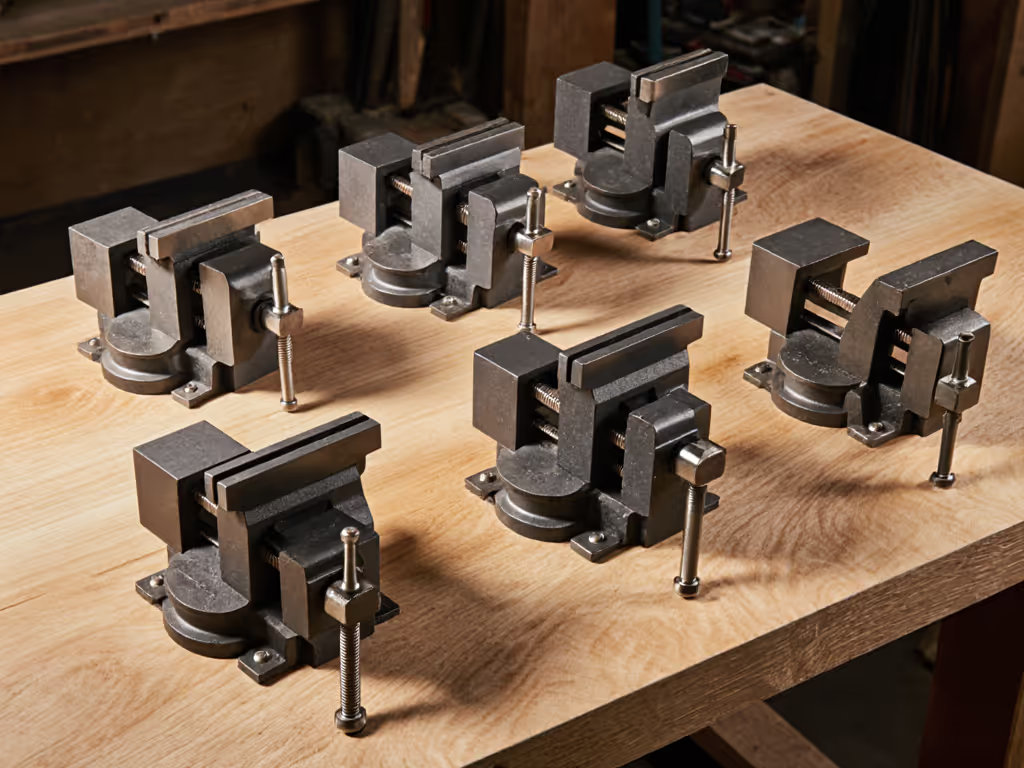
Head-to-Head: Choosing Your Match
Holding Power and Stiffness
| Factor | Shoulder Vise | Pattern Makers | Moxon |
|---|---|---|---|
| Rigid under heavy pressure | Excellent (built-in frame) | Good (bench-dependent) | Good (bench-dependent) |
| Best for planing | Yes, large boards | No, small detail only | Yes, medium boards |
| Assembly and clamping | Yes (large face) | Okay (compact) | Limited |
| Portable / moveable | No (permanent) | Yes | Yes |
| Cost (rough range) | $500-$2000+ | $50-$300 | $100-$500 |
Matching Your Workload
Ask yourself:
- What's your bench's permanent home? If it stays put and you own the space, a shoulder vise pays dividends. If you're renting, moving, or sharing space, skip it.
- What size stock do you handle most? Large boards → shoulder vise. Small parts and details → pattern makers. Medium boards, hand planing → moxon.
- How do you finish work? If you do a lot of final shaping, edge beading, or detail work, a moxon keeps you flowing. If you're doing assembly and glue-ups, you'll crave a larger shoulder-vise face.
- What's your tool philosophy? Hand-tool purist → moxon. Mixed hand and power, varied projects → pattern makers. Heavy traditional joinery → shoulder vise.
Avoiding the One-Vise Trap
Many makers assume they need one "hero" vise. The truth is quieter: the best setup pairs vises to task zones. A shoulder vise owns the front-left for heavy planing and joinery. A moxon clamps center-top for edge work and quick stock prep. A pattern makers vise roams to the right side or rear for small-parts holding and assembly fitting. To expand holding options in those zones, check our workbench add-ons guide covering dogs, hold-downs, and specialty clamps.
On my first solo build, I wasted hours chasing clamps and tools buried under lumber piles. My mentor walked me through a reset: clear zones, fixed holding points, and a home for everything. That single afternoon made the project fun again. The same principle applies here: a deliberate vise strategy beats a random collection of clamps.
Budget-Smart Staging
If you're starting from scratch or upgrading incrementally:
- Phase 1 (foundation): Invest in a solid bench top first. A moxon or pattern makers vise will transform a modest top into a capable station.
- Phase 2 (daily workflow): Add the vise type that matches your most common task. For hand-tool makers, that's usually a moxon. For traditional joiners, a shoulder vise.
- Phase 3 (flexibility): Once your primary vise is dialed in, add a complementary type for niche tasks or faster throughput.
This staged approach keeps you working, and learning, from day one, without the paralysis of choosing everything at once.
Safety and Setup Essentials
Regardless of which vise you choose, protect yourself:
- Keep hands clear of moving screws and jaws: Pinch hazards are real. Before tightening, confirm both hands and any loose clothing are safely away.
- Check your bench top for flatness and cracks: A vise is only as solid as what it clamps to. A warped or damaged top will wobble and increase injury risk.
- Tighten only as much as needed: Over-tightening strips screw threads, damages fine wood, and wears your hands out. "Snug" beats "vise grip."
- Inspect vise hardware regularly: Loose bolts, stripped threads, or rust on working surfaces reduce precision and reliability.
- Use soft jaws or clamping cauls when working on finished surfaces or delicate stock. Vises leave marks; a simple bit of scrap prevents regret. For a deeper checklist tailored to hand tools, read our hand tool woodworking safety guide.
Your Next Step: Workflow Before Purchase
The right vise isn't the one with the fanciest reviews or the highest price tag. It's the one that matches your bench, your tasks, and your space without creating friction. Spend an afternoon observing how you actually work: Where do you hold work? How often do you reposition? Are you planing, fitting, or assembling? Are your hands fatigued by reach or repetition?
Let those answers guide your choice, not the other way around. Moxon vise applications thrive in hand-tool workflows. Shoulder vise benefits anchor traditional benches. Pattern makers vises bridge gaps and fit tight spaces.
If you're still unsure, consider visiting a local woodworking club, maker space, or tool library where you can try different setups before committing. Many instructors and experienced makers are happy to let you work at their benches and share what they've learned. That hour of hands-on experience will clarify which vise (or pair of vises) belongs in your shop.
The goal isn't to own every vise type; it's to eliminate the setup friction that pulls you away from the actual work. Once you've matched the right vise to your workflow, you'll be amazed at how an afternoon with a dialed-in station feels more professional and purposeful than weeks of bouncing between makeshift clamping rigs. That's when your modest tools start feeling world-class.
Related Articles