Lutherie Workbench Comparison: Guitar vs Violin Needs
By Elena Kovács • 3rd Feb
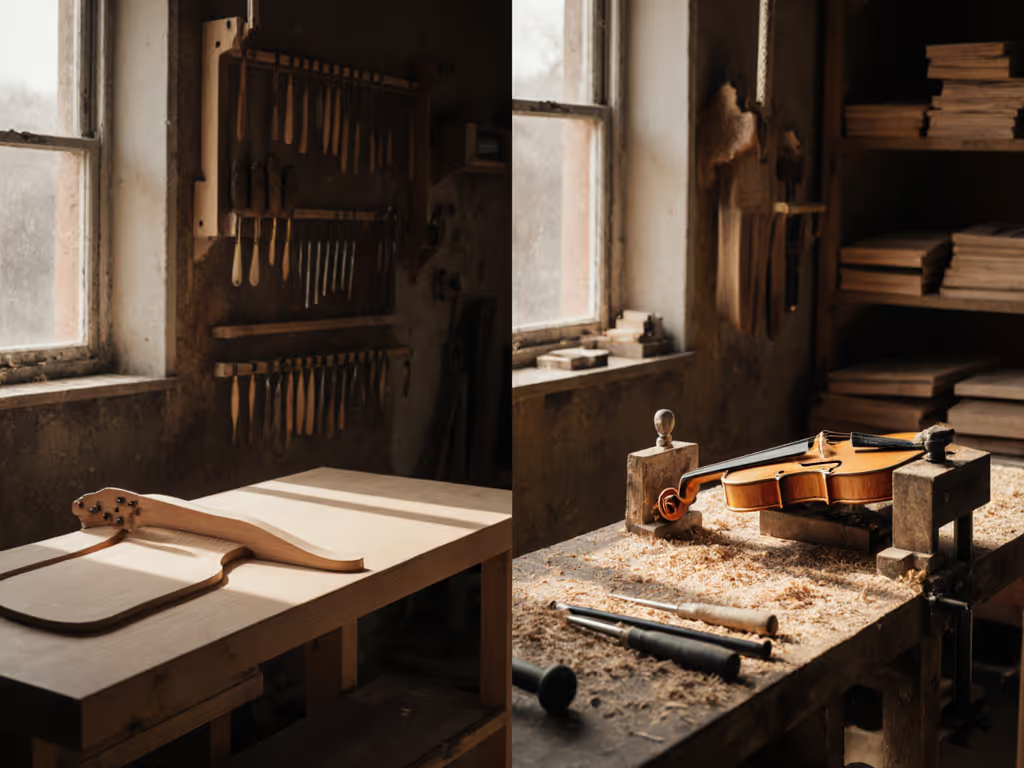
When you're deep into a delicate purfling cut or pressing a guitar top into glue-up, the last thing you should wrestle with is your workbench. A lutherie workbench comparison isn't just about wood thickness or vise brands, it is about aligning your human dimensions with your instrument's geometry. Understanding guitar vs violin workbench demands means designing around your body, not forcing yourself into generic shop standards. After all, your posture is a spec; design the bench around it.
Why "One-Size-Fits-All" Benches Fail Luthiers
Most woodworkers inherit bench recommendations from cabinetmakers: 34-36" height, 24-30" depth, rigid vises on the front apron. But lutherie's scale and movements differ radically. Guitar tops span 15-20", while violin scroll carving happens at 1/4 the scale. Your elbows, spine, and tool pressure zones shift accordingly. Ignore this, and you'll fight fatigue mid-joint, sacrifice precision on thin plates, or develop chronic strain (like I did lowering my bench by just 30 mm). That tiny shift wasn't about age; it was about meeting my body where it worked best. Let's dissect what really matters.
FAQ Deep Dive: Guitar vs Violin Bench Needs
Q: What's the optimal bench height for guitar vs violin work?
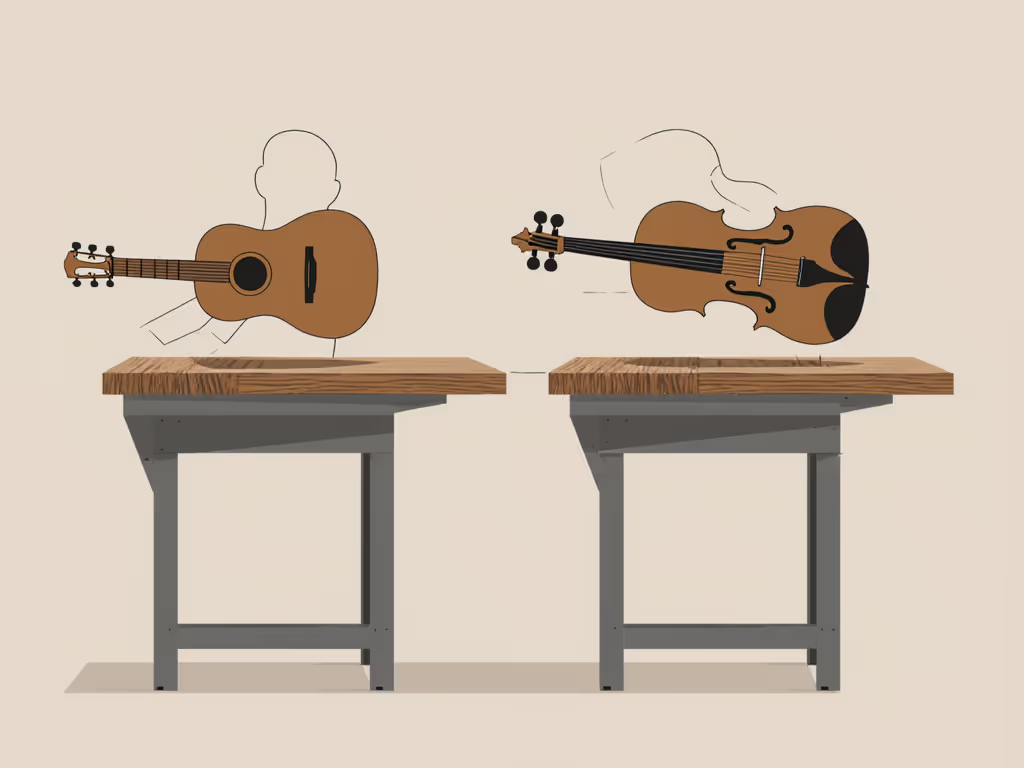
A: Guitar makers typically thrive at 32-34" (81-86 cm), while violin luthiers often need 36-38" (91-97 cm). Why the difference?
- Guitar: Planing soundboards requires downward pressure over wide spans. A lower bench (near elbow height when standing) lets you engage your core and weight without hunching. As one Crimson Guitars video notes, 'a 34" bench is too short for guitar builders - we do a lot of hand work and need the bench closer.'
- Violin: Scroll carving, purfling, and neck fitting demand fine, upward motions. Standing taller (bench near wrist height) prevents shoulder shrug and finger strain. A Roberto-Venn instructor confirms: sit-down benches for violin work often pair with adjustable stools at 36"+.
Measurement-backed tip: Stand with arms relaxed at your sides. Measure from floor to elbow crease. Subtract 2-3" for guitar work; add 1-2" for violin. This is your starting point, not a catalog number. For deeper ergonomics and formulas, see our science-backed workbench height guide.
Q: How does bench depth impact workflow for each instrument?
A: Guitar benches need 20-24" (51-61 cm) depth; violin benches function well at 16-18" (41-46 cm).
- Guitar: You're clamping curved bodies (e.g., an electric guitar body at 14" wide). A deeper bench lets you position clamps outside the workpiece without apron interference. As a MIMF forum user realized: "If I clamp a guitar with a clamp on this side and a clamp on that side, even a 20" bench is okay."
- Violin: Tasks are concentrated in small zones. A shallow bench improves reach to the entire work surface, eliminating torso twists during hours of inlaying or carving. Aprons become obstacles if too deep.
Human-first insight: Test depth by placing your instrument at your preferred angle. Your dominant hand should reach the center without leaning forward. If your shoulder lifts, the bench is too deep. Adjust before you commit.
Q: What workholding solutions differ most between guitar and violin benches?
A: Guitar benches prioritize front vise reach; violin benches favor micro-adjustable, localized clamping.
| Feature | Guitar Bench Need | Violin Bench Need |
|---|---|---|
| Vise Type | Long-travel front vise (4-6" jaws) for soundboards | Gunstock or carver's vise for 3D contouring |
| Dog Holes | 3/4" grid for parallel clamping faces | 1/2" grid for micro-positioning tiny parts |
| Critical Zone | Apron-free edges for clamping bodies | Flat top surface (no bolts obstructing carving) |
A Sawmill Creek user nailed it: "A luthier workbench is more like a stout desk than a Neander bench." Guitar makers need clearance to wrap clamps around large curves, and violinists need a sea of unobstructed maple for scroll work. Lutherie workholding solutions must match these distinct geometries, and forcing a Roubo-style bench on violin work sabotages workflow. If you're choosing vises, compare options in our workbench vise guide.
Q: How do space constraints affect bench design for each?
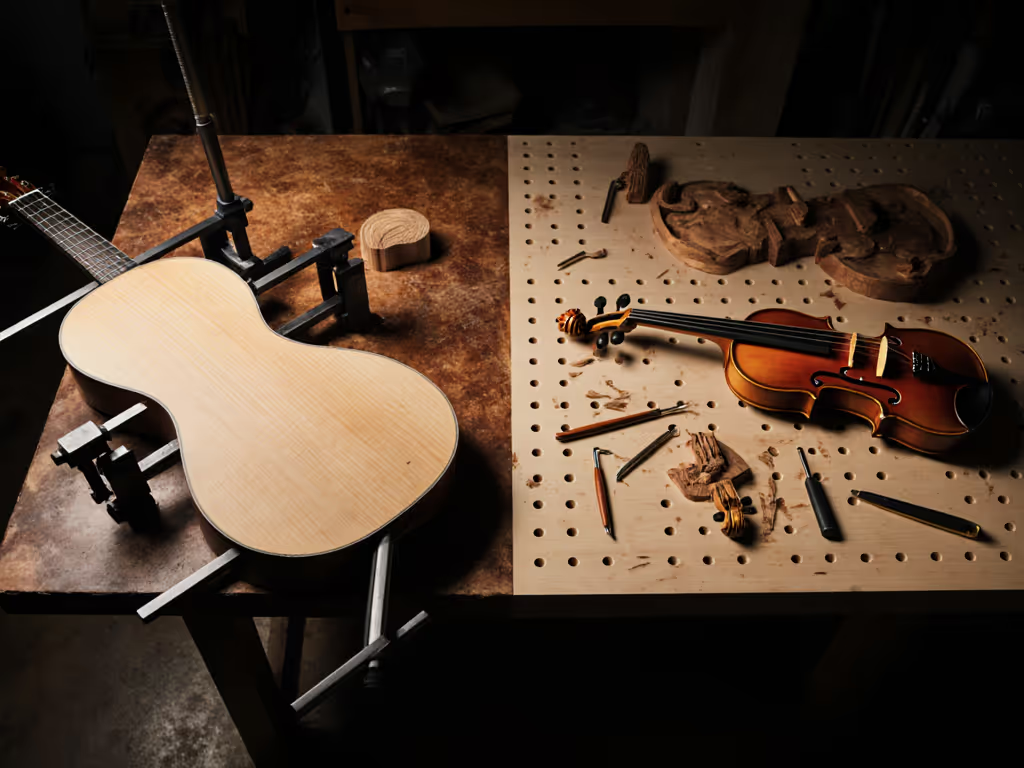
A: Garage-based guitar makers often need 5-6' (1.5-1.8m) benches; violin luthiers can optimize with 3-4' (0.9-1.2m) units.
- Guitar: Requires room for full-scale assembly (e.g., neck sets, bridge placement). A J-45 copy builder notes: "I'm thinking smallish, 4-5 feet, but no less."
- Violin: A heavy desk ($20 at thrift stores) often suffices. As one Fiddle Hangout user shared: "A sit-down bench with an adjustable chair is perfect for violin work."
Empathetic reality check: If you're in a 10x12' garage, don't let guitar-bench norms pressure you into wasting space. Violin benches thrive in corners; guitar benches need outfeed room. Measure your actual workflow arcs, not Pinterest boards. For small shops, see our space-smart compact workbench comparison.
Q: Why do vibration and fatigue hit differently?
A: Planing guitar tops induces low-frequency, high-amplitude vibrations; violin carving creates high-frequency micro-shakes.
- Guitar: Heavy bench mass (300+ lbs) absorbs planing shock. Roubo-style builds with thick laminated tops excel here. For data on stiffness and damping, see our workbench top thickness guide.
- Violin: A lighter, maple-top bench transmits less hand fatigue during hours of delicate scraping. But it must be rock-solid at point-of-contact, no racking when pressing a delicate rib.
Your bench's stiffness isn't about "not moving." It's about moving only where you intend. A guitar top shifts under planing pressure? Your bench yielded. A violin rib cracks during clamping? Vibration telegraphed through an unstable top.
The Real Cost of Ignoring Instrument-Specific Design
A mismatched bench wastes more than money, it steals precision. Guitar makers using violin-height benches (36"+) develop shoulder strain from reaching down to plane tops. Violin luthiers on low benches (32") crane their necks, distorting fine motor control. As one MIMF user warned: "Spending time thinking about a 'luthier workbench' is a waste until you've built instruments." Wait too long, and you'll bake bad posture into your muscle memory.
Actionable Next Step: Build Your Human-First Bench
Don't start with wood specs, start with your body. Today, do this:
- Measure: Stand in your shop wearing work shoes. Bend elbows 90 degrees as if planing. Note floor-to-elbow height.
- Test: Prop a board at that height. Place your instrument at working angle. Can you apply even pressure without leaning, hunching, or shifting weight?
- Adjust: Add or remove 1" blocks until your shoulders stay relaxed during a 5-minute simulated task. This is your benchmark.
Small ergonomic wins stack into big improvements in endurance and accuracy. A 30 mm bench height shift transformed my dovetail runs, not because it was "ergonomic", but because it let my body work instead of fight. For guitar builders, that might mean a 32" bench with footrail; for violin, a 37" desk with saddle stool. Let your instrument's geometry guide the numbers, but always design human-first.
Your next bench shouldn't just hold wood, it should hold you in position to do your best work. Measure twice, build once, and let your body thank you for decades of precise, pain-free making.
Related Articles