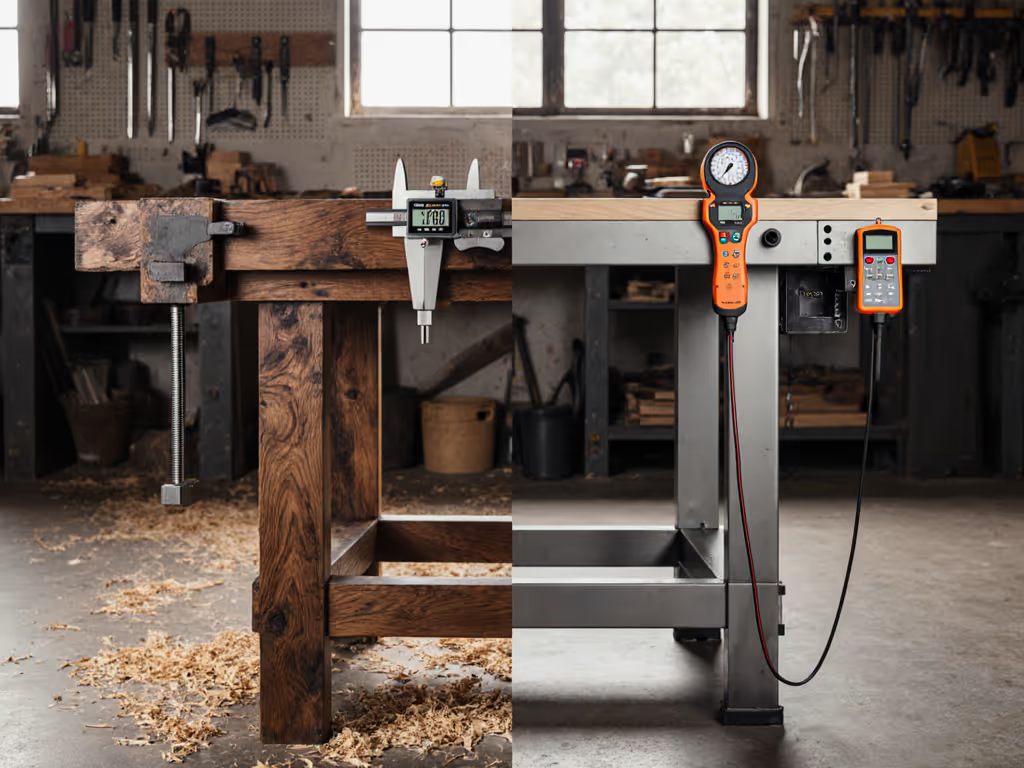

Saltwater Workbench Showdown: Mobile vs. Marine Lab Bench
By Taro Nakamura • 10th Jan
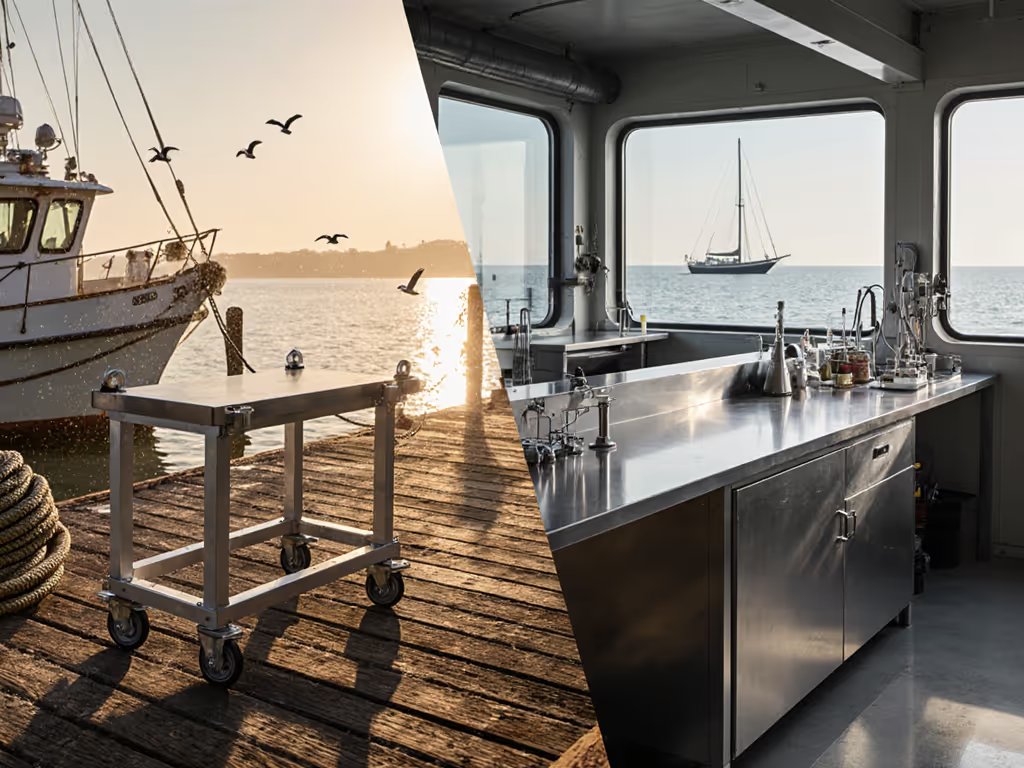
When your work regularly involves saltwater exposure (whether you're building marine instruments, maintaining oceanographic equipment, or crafting custom boat components), your mobile workbench becomes the frontline defense against corrosion. Unlike standard workshop benches, a true saltwater workbench must survive daily exposure to corrosive elements while maintaining precision and stability. If coastal humidity is your daily reality, see our humidity-resistant workbench guide for material and design choices that survive salt air. I've seen too many 'marine-ready' benches fail within months because they weren't engineered for the specific failure modes of salt environments. This isn't just about convenience; it's about preventing costly downtime when your bench becomes the weakest link. If you're setting up a marine lab or workshop near the coast, understanding the real differences between mobile units and dedicated marine benches will save you headaches down the line.
FAQ Deep Dive: Saltwater Workbench Selection
What defines a proper saltwater workbench versus standard workshop bench?
A standard workshop bench focuses on flatness and stiffness for joinery or assembly. In saltwater applications, corrosion resistance becomes the primary metric (not just a nice-to-have). Any hardware exposed to salt air or splashes must be either stainless (316L minimum), marine-grade aluminum, or properly isolated from contact. I've repaired countless benches where the manufacturer 'upgraded' to 304 stainless but neglected to insulate it from carbon steel frames, a galvanic corrosion recipe that destroys joints in months.
True saltwater workbenches feature complete isolation of dissimilar metals, drainage systems to prevent salt accumulation, and surfaces that won't telegraph corrosion into your workpieces. For preventing racking and vibration at the base, dig into our stability engineering guide. The bench itself must disappear into your workflow, meaning it handles the environmental stress so you can focus on precision work without constantly fighting bench maintenance.
Why is corrosion resistance critical for marine environments beyond obvious rust?
Salt exposure creates two hidden failure modes most users overlook:
- Capillary corrosion: Salt water wicks into microscopic gaps between fittings, creating internal corrosion that weakens joints from within
- Crevice corrosion: Stagnant salt water in joints or trapped areas accelerates metal degradation up to 10x faster than exposed surfaces
Standard workshop benches often feature bolted connections with tiny gaps that become salt traps. Marine lab benches address this with welded joints, continuous gaskets, or engineered drainage. On a recent ocean buoy calibration project, we lost a week's work because a standard mobile bench's leveling feet seized solid from internal corrosion, a hard lesson learned: salt finds every vulnerability.
How does mobility impact stability in saltwater applications?
Uptime beats cleverness (especially when you're racing tides or weather windows).
Mobility introduces three critical failure points in salt environments:
- Caster corrosion: Most polyurethane casters degrade rapidly when exposed to saltwater, leaving you with wobbly, unstable bases
- Frame flex: Mobile frames require expansion joints that become salt traps and corrosion points
- Re-leveling fatigue: After any movement, you must re-check for level and square, which becomes a nightmare when salt has seized adjustment mechanisms
I've seen field crews abandon mobile units after just two seasons because the casters seized and frame joints corroded. Before you commit to mobility, read our workbench caster system guide to choose corrosion-resistant wheels that won't wobble under load. The paradox? Mobile units designed for marine environments often end up less mobile over time than properly installed marine lab benches.
What materials actually hold up against salt corrosion in work surfaces?
Don't trust 'marine-grade' marketing claims. Demand material specifications:
- 316L stainless steel (not 304): The only viable option for structural frames in direct salt exposure
- Fiberglass-reinforced polymer (FRP): Non-conductive, won't corrode, and handles constant moisture
- Ceramic-coated steel: Better than bare steel but requires regular inspection for coating breaches
- Marine plywood (epoxy-coated): Only suitable for temporary setups with constant maintenance
Avoid phenolic resin tops despite their chemical resistance; they delaminate under UV exposure combined with salt moisture. For indoor wet labs and splash zones, compare options in our plastic workbench guide for wet environments to balance chemical resistance and longevity. During a coastal sensor deployment, we switched from phenolic to FRP after discovering our supposedly 'marine-ready' bench had internal delamination within six months.
What's the real-world durability difference between "marine grade" claims?
The term 'marine grade' means nothing without specifics. Request these details from any supplier:
| Material | Minimum Standard | Failure Mode | Field Test Duration |
|---|---|---|---|
| Stainless Steel | 316L minimum | Galvanic corrosion if not isolated | 3+ years coastal exposure |
| Aluminum | 5000 or 6000 series anodized | Pitting corrosion in salt spray | 2-3 years |
| Coatings | MIL-PRF-23377 Class N2 or equivalent | Blistering at edges/scratches | 1-2 years before touch-ups |
Most failures occur at transition points between materials, not the materials themselves. That's why properly designed marine lab bench units use isolation techniques like nylon bushings between dissimilar metals. A marine environment bench should have no direct contact between carbon steel and stainless components.
How does daily maintenance differ between mobile and fixed marine benches?
Mobile units require rigorous daily rituals that fixed marine benches mitigate through design:
Mobile workbench maintenance (daily):
- Wipe all exposed metal with fresh water
- Check caster rotation and lubricate (with marine grease)
- Inspect frame joints for salt accumulation
- Verify level after each move
Marine lab bench maintenance (daily):
- Wipe surfaces with fresh water
- Check drainage channels for debris
Fixed marine benches eliminate the corrosion points introduced by mobility hardware. To keep them performing year-round near the coast, follow our climate-specific workbench care protocols. The investment in proper installation pays back through reduced maintenance overhead. I've tracked crews who spent 15% of their productive time just maintaining mobile units in coastal environments, time better spent on actual work.
What are the hidden costs of choosing wrong for saltwater applications?
The true cost isn't the purchase price; it's the operational downtime:
- Calibration drift: Corroded frames lose squareness, requiring constant rechecking of measurements
- Hardware replacement: Seized bolts and corroded joints require field repairs
- Workpiece contamination: Rust from bench components transfers to sensitive instruments
- Emergency rework: Failed assemblies due to unstable work surfaces
On one project, we traced faulty sensor calibrations to a subtly corroded mobile bench frame, and it cost us two weeks of field time to diagnose. The apparent savings of a cheaper mobile unit disappeared after three months of field repairs.
When does a mobile bench make sense for marine work?
Only consider mobile units if ALL these apply:
- You work in controlled environments (indoors marine lab, not exposed coastal)
- You have dedicated storage away from salt exposure
- Your mobility needs are measured in room-to-room (not field-to-field)
- You implement a strict maintenance schedule
For true field applications, I recommend overbuild the interface; let precision handle the finesse. Install a dedicated oceanography workstation that disappears into your workflow through reliability. The film set lesson applies here: that overbuilt, ugly bench that never failed was worth every penny when we needed to hit our shooting schedule.
The Verdict: Which Works for Your Marine Environment?
After decades of field failures and hard-won lessons, here's my results-first assessment:
Choose a marine lab bench when:
- You work in constant salt exposure (coastal labs, shipboard, field stations)
- Precision work requires absolute stability (sensor calibration, instrument building)
- You value uptime over occasional mobility
- Your operation runs on tight schedules where bench failures cost real money
Choose a mobile workbench only when:
- You work indoors with minimal salt exposure
- You move between controlled environments (lab to clean room)
- You implement rigorous daily maintenance protocols
- Your mobility needs are predictable and infrequent
The Reality Check:
Most users overestimate their need for mobility and underestimate salt's corrosive power. A properly installed corrosion-proof workbench will outperform and outlast any mobile unit in true marine environments. I've seen marine techs start with mobile units then upgrade to fixed marine benches within 12-18 months as salt exposure took its toll.
Your bench should never be the constraint in your workflow, and it should disappear into your process through rock-solid reliability. That film set build taught me: when a bench collapses during a critical glue-up, no amount of clever features matters. Uptime beats cleverness every time.
For serious saltwater work, invest in a properly specified marine lab bench system that addresses real failure modes, not just surface-level 'marine' claims. Build your workflow around reliability, not the illusion of flexibility. The best bench is the one you never have to think about, because it just works, day after salty day.
Related Articles